


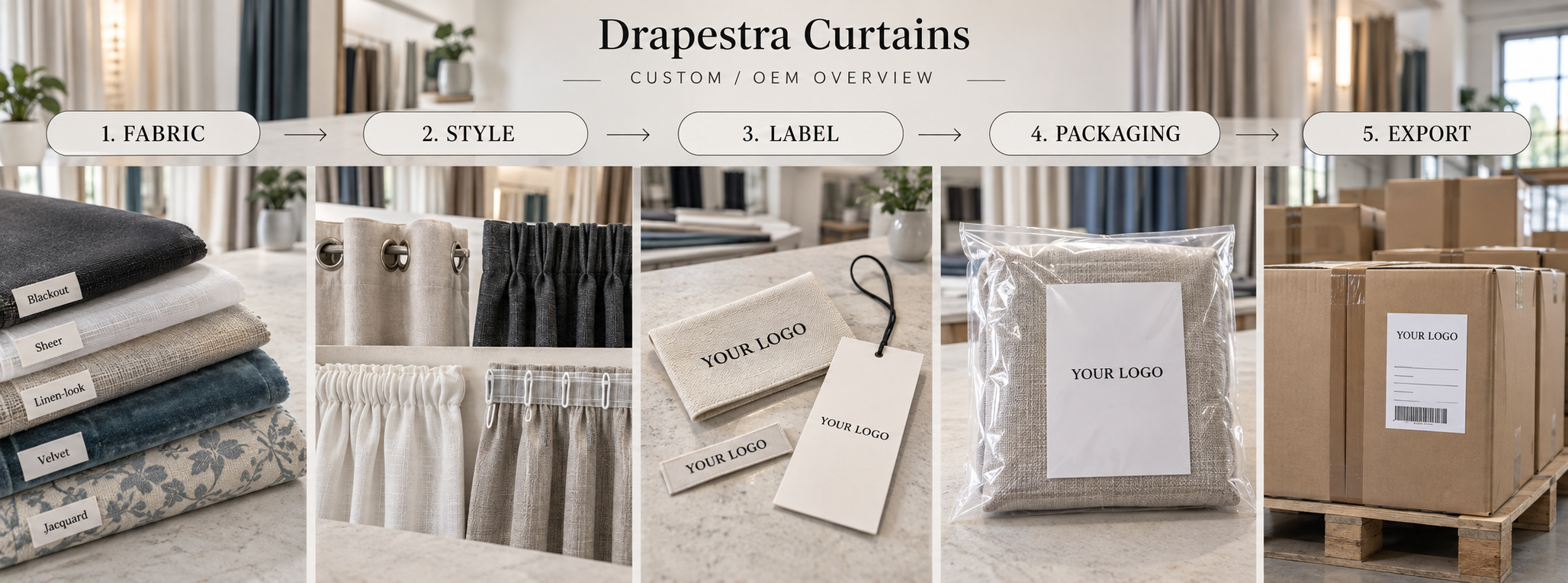
 Custom Curtain Programs Based on Your Market Requirements
Drapestra develops custom curtain programs for importers, wholesalers, distributors, private label brands, hospitality suppliers and commercial project buyers. Our work covers window, hotel, hospital, bedroom, door, bed and selected PVC curtain applications, with specifications adjusted to the intended market and use.
Customization begins with practical order information rather than a general request for “custom curtains.” We review the product type, application, fabric or material, finished dimensions, heading construction, colorways, quantity, branding and packing requirements before confirming feasibility, MOQ and sample arrangements.
Buyers with a developed specification can submit a technical sheet, artwork or reference sample. Buyers at an earlier stage can start with an existing curtain construction and adjust the fabric, dimensions, color, heading, labels or packaging. Our custom curtain design support focuses on turning these requirements into a specification suitable for sampling and repeat production.
Fabric, Color and Pattern Development
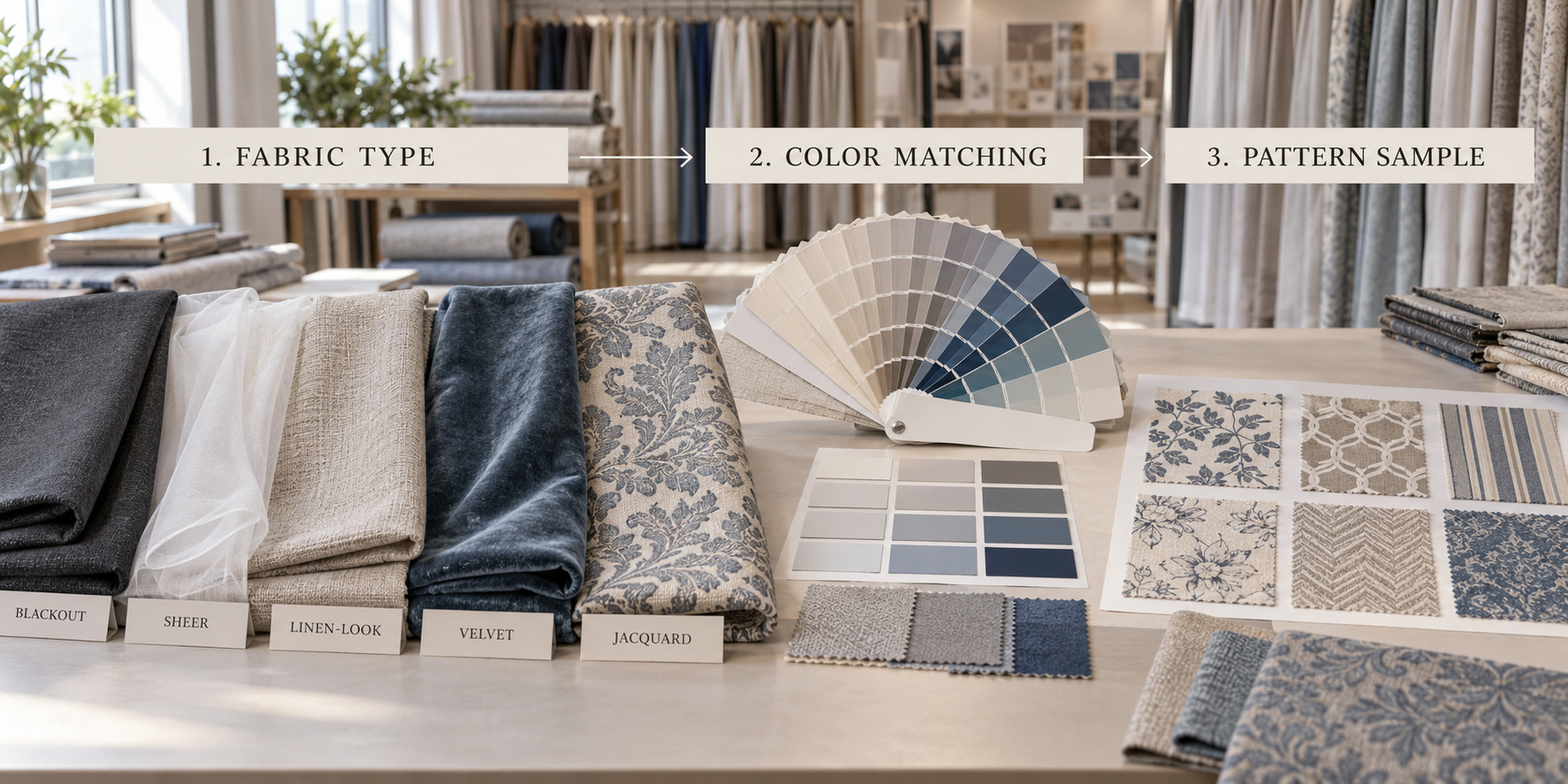
Available textile directions include polyester, blended, cotton-linen, velvet, jacquard, blackout and sheer fabrics. The suitable option depends on the required appearance, light control, application, target cost and order quantity. Functional requirements for hospital, hotel or commercial curtains must be identified separately and confirmed against the selected material.
For color development, buyers may provide a physical swatch, color reference or approved sample. Printed, jacquard or embroidered details require clear artwork, dimensions, placement and color information. Existing fabrics and available colors generally simplify sampling and MOQ, while custom-dyed materials, exclusive patterns or special finishes may require a higher material commitment and longer preparation time.
Detailed material decisions can be reviewed through our custom fabric selection service.
 Sizes, Styles and Curtain Construction
Custom dimensions are confirmed as finished curtain measurements, not only as window dimensions. A workable specification should state the finished width and drop, number of panels, quantity by size and the required heading or hanging method.
Depending on the selected product, development may include eyelets, hooks, rod pockets, pleated headings, lining, bottom hems, side hems and accessory installation. Large sizes, repeated patterns, joined panels and lined constructions require additional review because they affect fabric consumption, cutting, sewing time and finished appearance.
For hotel or project orders, buyers should provide a window schedule, size breakdown or room list where available. This helps us separate room types, panel sizes and packing identification before sampling. See custom sizes and dimensions for the information required to prepare a size-based quotation.
Logo, Labels and Private Label Details
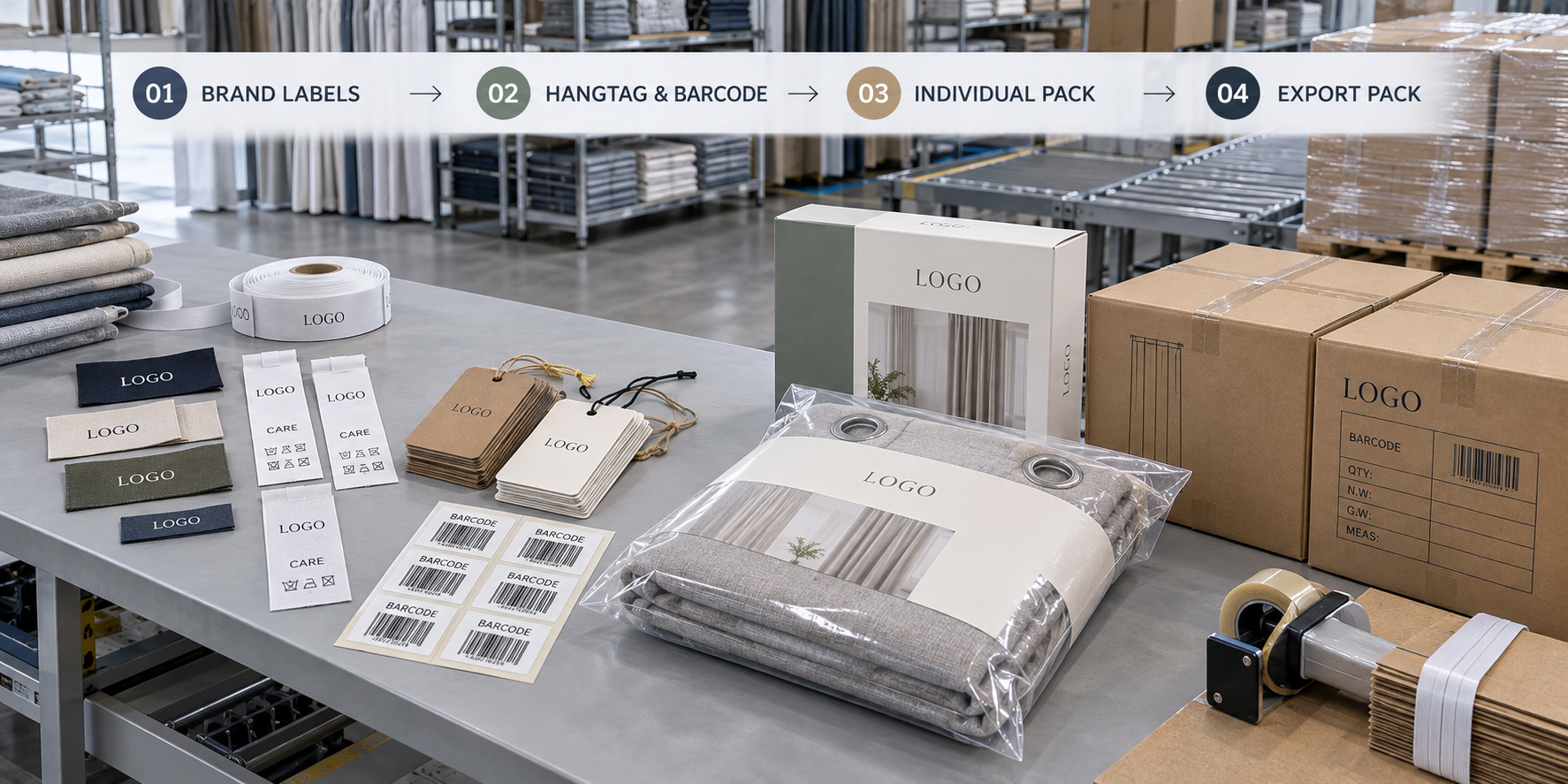
Branding is normally added through woven labels, printed labels, care labels, size labels, hangtags, insert cards, barcodes or printed packaging. Embroidery or direct printing can also be reviewed when suitable for the curtain material and design.
Logo files should be supplied in a clear vector or high-resolution format with the required size, color and placement. Label wording, fiber content, care instructions, barcode data and target-market information remain subject to buyer approval.
Before bulk production, the approved branding details should be recorded together with the curtain specification. This reduces the risk of using the wrong artwork version, label position or barcode on repeat orders.
Custom Packaging for Wholesale and Project Supply
Packaging can be prepared for wholesale distribution, private label retail programs or project delivery. Available directions include individual polybags, paper inserts, woven or paper labels, barcodes, retail packs, master cartons and buyer-specific carton markings.
The packing method must match the curtain size, fabric, panel quantity and sales format. A single-panel retail pack, a paired curtain set and a room-numbered hotel order require different folding, labeling and carton arrangements. Final packaging artwork, pack quantity and carton marks should be approved before materials are ordered.
Sample Development and Pre-Production Approval
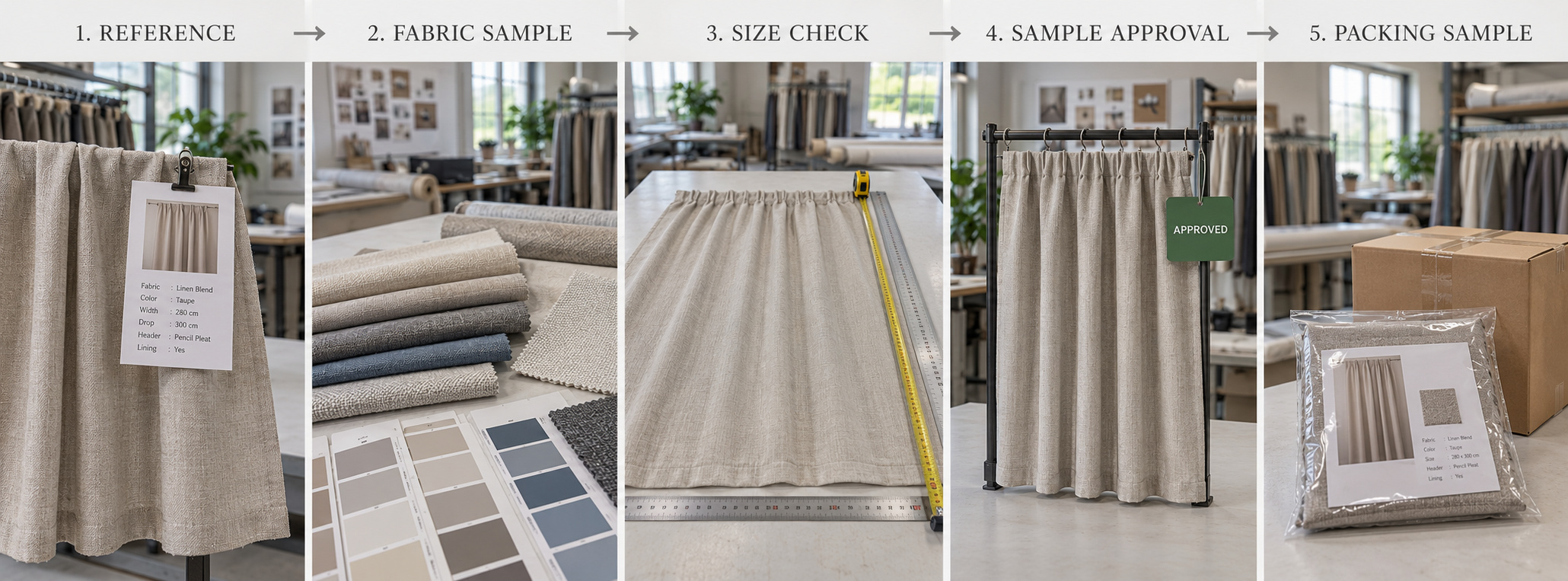
Standard samples normally require 3–5 working days. Customized samples typically require 7–15 working days, depending on fabric availability, dimensions, printing, embroidery, accessories and packaging requirements.
The sample is used to review material, color, size, heading construction, stitching, appearance and branding details. Packaging prototypes or printed artwork may be confirmed separately when their preparation time differs from the curtain sample.
Any approved changes should be added to the final order specification. Bulk production begins after the product details, sample, quantity, labels, packaging and commercial terms have been confirmed. More complex developments may require a revised sample before approval.
Our sample development page explains how reference samples, artwork and specifications move through review and approval.
 MOQ, Lead Time and Bulk Production
Standard curtain programs usually start from 300–500 pieces per style and color. Customized OEM projects commonly start from 500–1,000 pieces, depending on the selected fabric, dimensions, processing, color quantity and packaging.
Typical bulk production takes approximately 25–35 working days after sample approval and order confirmation. Complex custom programs may require 35–45 working days. Custom materials, functional testing, multiple size breakdowns or printed packaging can affect both MOQ and lead time.
During production, materials, cutting dimensions, sewing, appearance, accessories, labels and packaging are checked against the confirmed specification. Final random inspection and third-party inspection or testing can be arranged when required.
Information Required for a Custom Curtain Quotation
Please provide the curtain type, application, material or fabric preference, finished dimensions, heading style, quantity by size and color, functional requirements, branding, packaging and destination country or port.
Reference photos, artwork, technical drawings, physical samples and project schedules are useful when available. Clear information allows us to evaluate production feasibility, sample cost, MOQ, lead time and the appropriate EXW, FOB, CIF or DDP arrangement before preparing the quotation.