


Curtain sewing converts approved fabric panels into finished products with the required dimensions, heading structure and hanging appearance. For importers, private label brands, hospitality suppliers and project buyers, consistent stitching is important because small variations can affect panel alignment, drape, strength and installation.
At Drapestra, sewing specifications are confirmed during sample development and transferred to bulk production. Curtain type, fabric behavior, finished dimensions, heading style, seam construction, accessories and appearance requirements are reviewed before production begins.
From Approved Cut Panels to Sewing
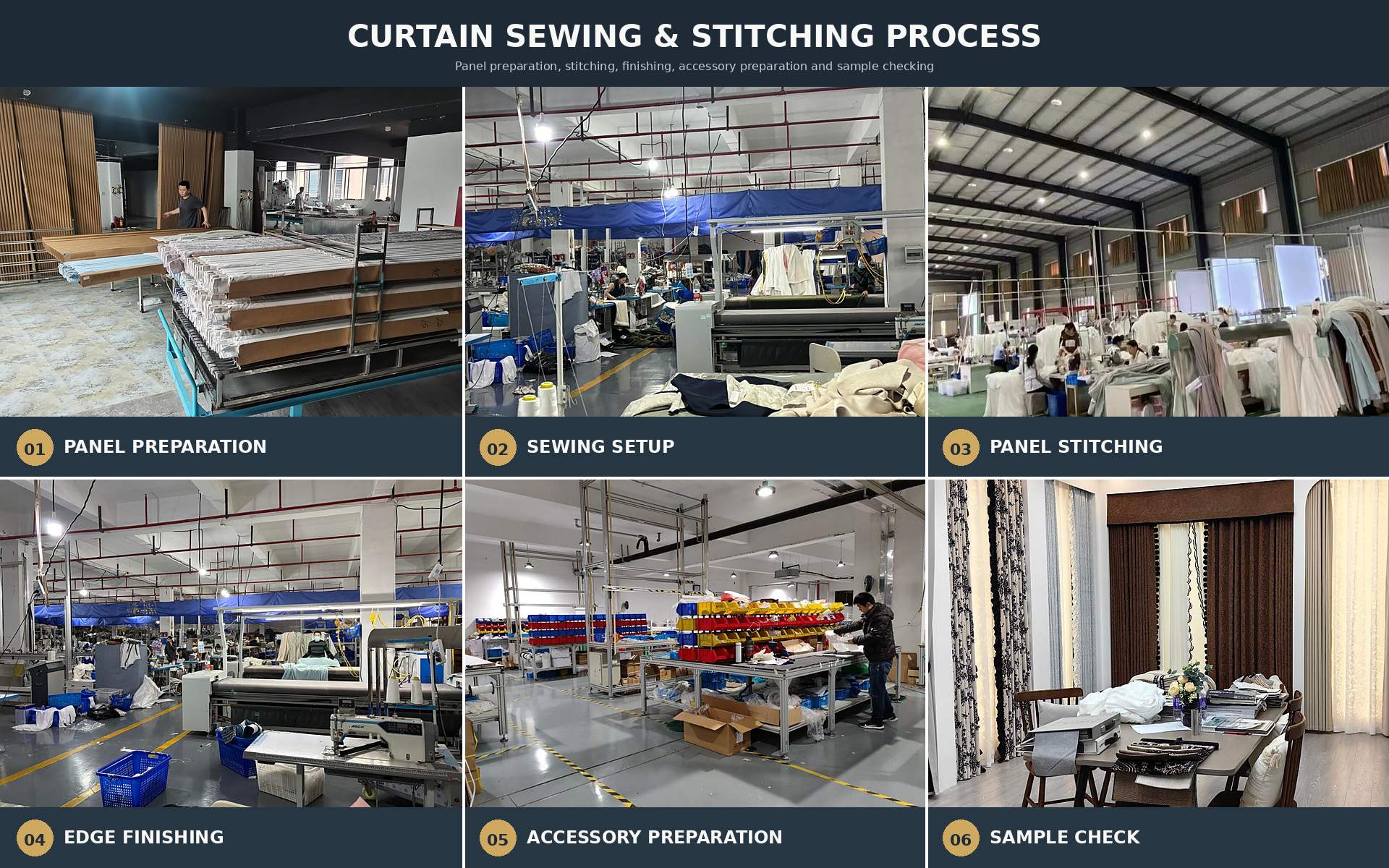
Sewing accuracy starts before the fabric reaches the sewing workstation. Cut panels must correspond to the approved width, length, pattern direction and production specification. Printed, jacquard and directional fabrics also need correct orientation before matching panels are assembled.
Our fabric cutting process explains how material preparation, spreading and cutting influence the dimensions and alignment available to the sewing team.
Before stitching, operators check the panel identification, fabric face, joining position and required components. Panels for one order or size group are kept organized to reduce mixing between colors, dimensions or styles.
 Seam Construction and Stitching Control
The sewing method depends on the fabric, curtain structure and intended application. Blackout fabric, sheer fabric, velvet, linen-look materials and layered hotel curtains do not behave identically under the sewing machine.
Production control may cover:
- Side seams and bottom hems
- Panel joining where required
- Header tape attachment
- Rod pocket or tab construction
- Lining and blackout layer assembly
- Tieback or accessory sewing
- Label placement and attachment
Thread color, seam position, stitch appearance and seam allowance are confirmed against the approved sample or specification. Delicate sheer fabrics require particular attention to puckering and visible needle marks, while heavier materials require stable seams without uneven feeding or distortion.
Detailed requirements for bottom and side edges are covered on our edge finishing and hemming page.
Heading Construction and Accessory Preparation
The heading determines how a curtain connects to a rod or track and how it hangs after installation. Eyelet, hook, pleated, rod-pocket and taped headings require different measurements and assembly methods.
Spacing, header depth, reinforcement and accessory position should be confirmed before bulk sewing. Incorrect spacing can change the finished width or create uneven folds. When eyelets, hooks, rings or heading tape are specified, the sewing and accessory teams follow the same approved construction details.
For accessory-specific options and installation controls, buyers can review eyelet and hook installation.
In-Process Measurement and Workmanship Checks
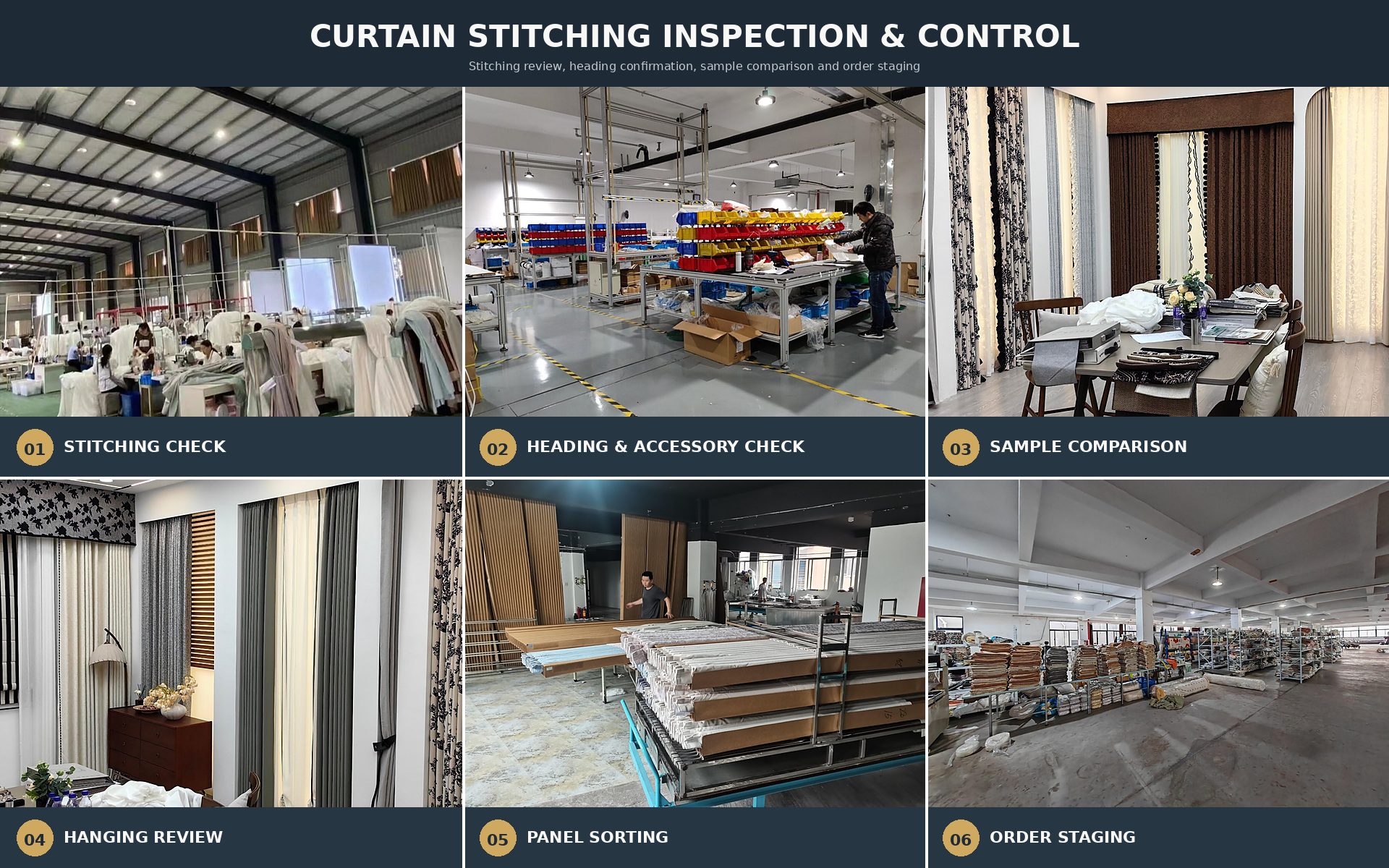
Sewing inspection is carried out during production rather than waiting until every panel is complete. Checks focus on finished width and length, seam straightness, skipped stitches, loose threads, puckering, matching components and heading consistency.
Measurements are taken according to the agreed method because fabric relaxation, hemming and heading construction can influence the final dimensions. Any repeated issue should be corrected at the sewing stage before it affects a larger quantity.
 Sample Approval and Bulk Order Consistency
For customized orders, the approved sample provides the practical reference for workmanship, dimensions, heading structure, label position and overall appearance. Bulk sewing begins after these details are confirmed.
A standard order may use an existing construction, while an OEM project may require adjusted sizes, layered materials, special headings or branded labels. These differences can affect sample time, MOQ, sewing complexity and production lead time.
Completed panels proceed to the finished curtain inspection stage for dimensional, stitching, appearance and accessory checks before folding and packing.
Information Needed for a Sewing Evaluation
To evaluate production feasibility and prepare an accurate quotation, please provide the curtain type, fabric, finished dimensions, heading style, lining requirements, quantity per size and color, accessory details, label position and reference sample or drawing where available.
Clear construction information helps us assess sewing complexity, sample requirements, production time and the appropriate quality-control points for your wholesale or OEM curtain order.