


Fabric Decisions Affect the Complete Curtain Order
Fabric selection influences curtain appearance, drape, light control, sewing performance, finished dimensions, packing volume and cost. Drapestra reviews curtain materials for importers, wholesalers, private label brands, hospitality suppliers and project buyers before customized bulk production begins.
Available directions may include polyester, blended fabrics, cotton-linen styles, velvet, jacquard, blackout and sheer materials. The appropriate option depends on the curtain application, required performance, target price, dimensions and order quantity.
A reference photograph alone is not enough to define a fabric. Buyers should confirm the expected composition, construction, weight or hand feel, color, surface finish and functional requirements where applicable.
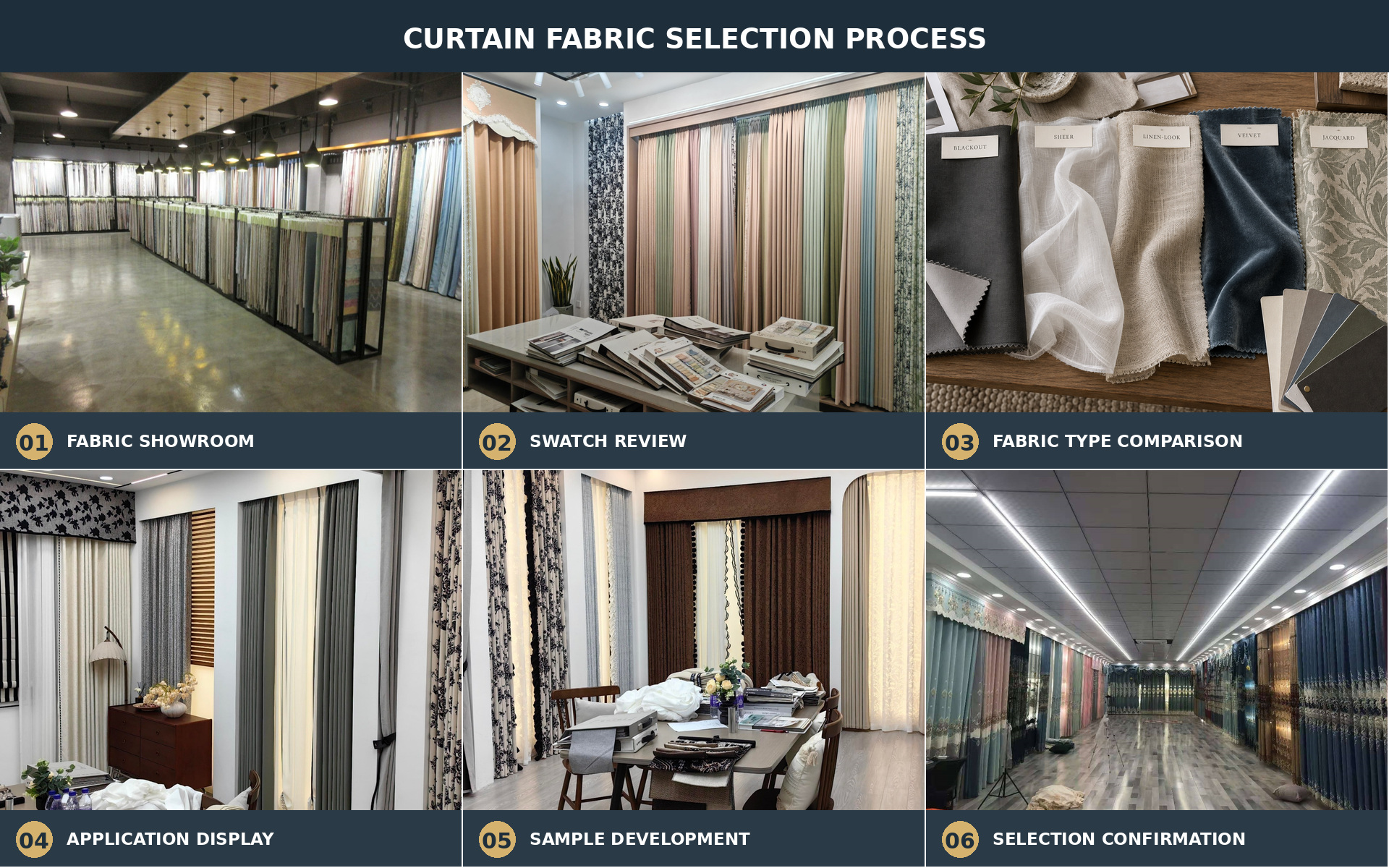 Fabric Information Required for Evaluation
Buyers can send an existing fabric sample, curtain sample, material specification or clear reference images. If exact replication is required, a physical reference is more useful than screen-based color or texture comparisons.
The initial material brief should identify:
- Curtain type and intended application
- Preferred fiber composition
- Fabric weight or reference quality
- Blackout or light-transmission requirement
- Color or approved color reference
- Solid, printed, jacquard or embroidered design
- Required fabric width and finished curtain dimensions
- Order quantity per style and color
- Testing requirements for the destination market
Our Custom Fabric Selection page explains how materials can be evaluated during product development.
Incoming Fabric Inspection Before Cutting
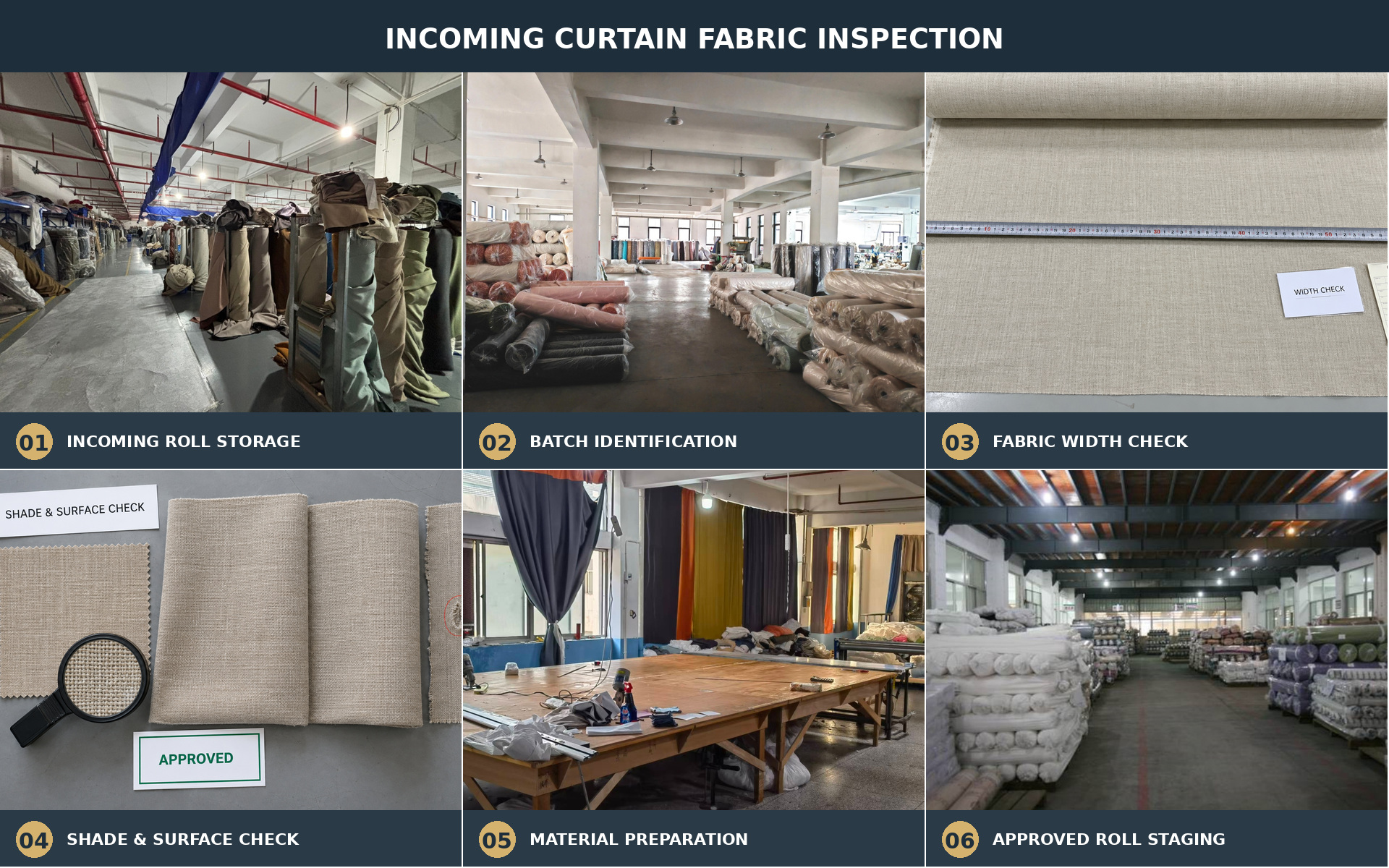
Incoming fabric is checked against the confirmed order specification before it is released for cutting. The inspection scope depends on the fabric type and agreed requirements.
Typical checks include fabric type, roll identification, color, usable width and visible surface condition. Stains, weaving defects, obvious shade differences, damage or other visible issues should be identified before cutting begins.
Material details are matched with the approved sample or specification. If a significant difference is found, the affected material should be separated for review rather than mixed into production.
 Color and Shade Consistency
Color should be reviewed under suitable lighting and compared with the approved swatch. Different production lots may show minor shade variation, especially when the order involves dyed fabric or several material constructions.
For paired curtains, inconsistent shade can be particularly visible after installation. Fabric rolls should therefore be identified and allocated carefully when panels must be matched as sets.
Printed materials require additional checks for print clarity, repeat size and pattern direction. Jacquard and embroidery designs should be reviewed for motif alignment and visible construction consistency. Relevant controls are described further under Pattern Printing & Color Control.
Inspection Priorities by Fabric Type
Blackout fabrics should be reviewed for surface condition, backing consistency and the agreed light-control requirement. Sheer curtains require attention to transparency, snags, weaving defects and edge distortion.
Velvet must be checked for pile direction, pressure marks and visible shade changes caused by nap orientation. Linen-look and blended materials should be reviewed for texture consistency and dimensional behavior. Patterned fabrics also require correct cutting direction.
The inspection standard should reflect the approved product rather than apply the same criteria to every curtain material.
How Fabric Selection Affects MOQ and Lead Time
MOQ depends partly on whether the selected fabric is available from stock or requires special dyeing, printing, weaving or finishing. Custom colors and patterns generally need additional quantity and development time.
Material changes after sample approval may alter fabric consumption, sewing settings, finished appearance, quotation and production schedule. Customized samples typically require 7–15 working days, while bulk production normally requires approximately 25–35 working days after approval. Complex customized programs may require 35–45 working days.
Release to Cutting and Bulk Production
Approved rolls are identified according to the order, color and production batch before cutting. Fabric width, pattern direction and panel dimensions are considered when preparing the cutting arrangement.
The next manufacturing stage is explained on our Fabric Cutting Process page.
To request a material review, provide the curtain application, fabric reference, dimensions, colors, quantity, required performance and destination-market inspection or testing requirements. This information allows us to evaluate feasible options before sample development and bulk production.