


Selecting Fabric for the Intended Curtain Application
Drapestra supports fabric selection for importers, wholesalers, private label brands, hospitality suppliers and project buyers developing finished curtain programs. The suitable fabric depends on the intended application, required appearance, light control, construction, target price and order quantity.
Window, bedroom and hotel curtains may use blackout, sheer, linen-look, velvet, jacquard, polyester or blended fabrics. Hospital and institutional curtains may require project-specific functional materials. PVC curtains follow a different material and production logic and should be evaluated according to their operating environment.
We review fabric together with the curtain design rather than treating it as a separate decorative choice. Fabric weight, width, texture and structure can affect cutting, sewing, pleating, finished dimensions, packaging volume and overall cost.
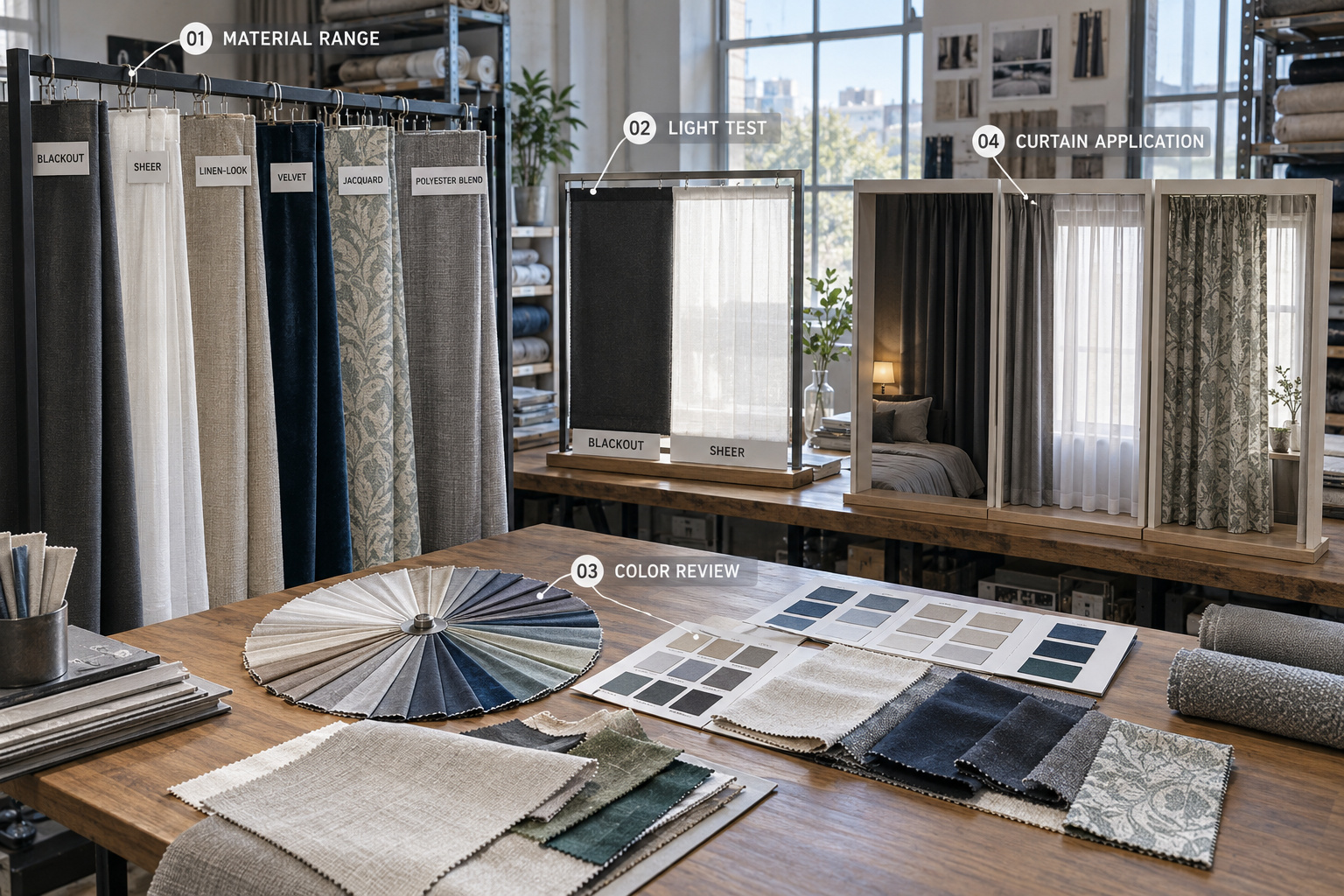 Common Curtain Fabric Directions
Blackout fabrics are suitable for bedroom, hotel and other applications requiring stronger light control. The actual blackout requirement should be confirmed for the selected material rather than assumed from the product name.
Sheer fabrics provide privacy and light diffusion and may be supplied alone or coordinated with blackout curtains. Their transparency, texture, color and finished construction should be reviewed under suitable lighting.
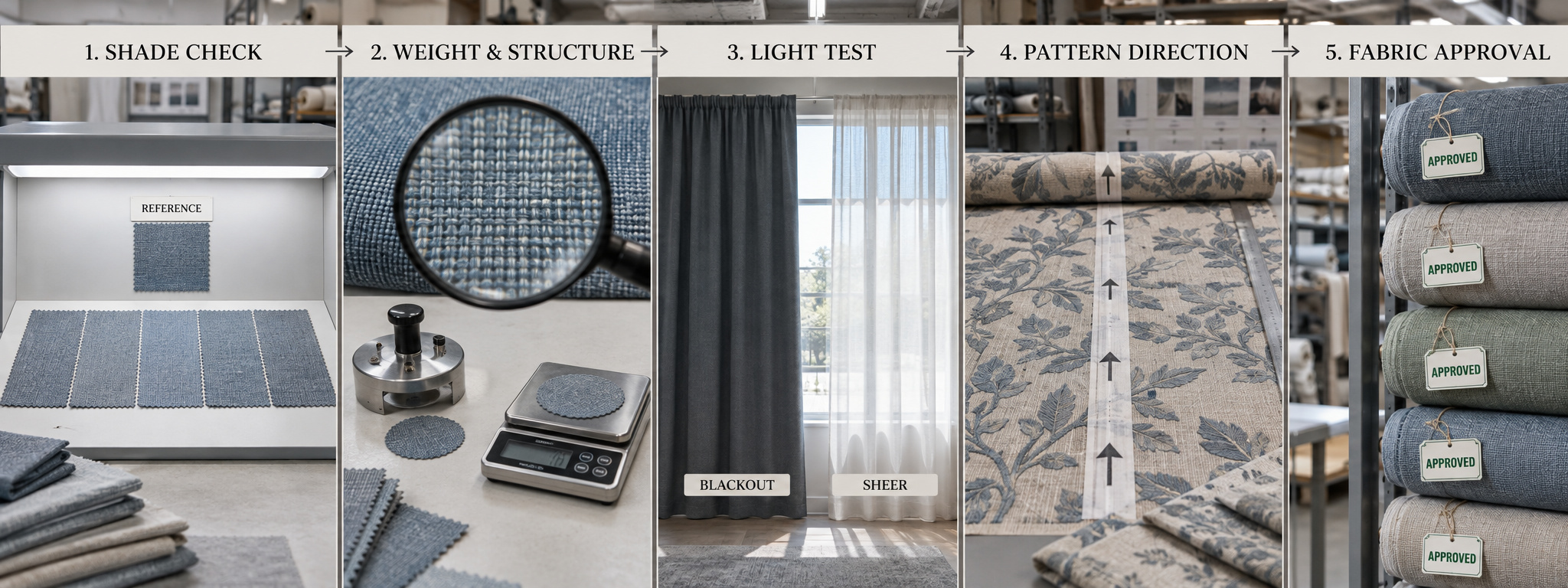
Linen-look and blended fabrics are often selected for decorative window curtain programs where texture and drape are important. Velvet provides a heavier appearance but can affect sewing, folding and packing. Jacquard fabrics create patterns through the fabric construction and require attention to pattern direction and repeat consistency.
Material availability and performance vary by product. Buyers should provide a reference fabric, physical swatch, composition preference or target application where possible.
Fabric Samples and Buyer Approval
Fabric approval normally begins with available swatches or selected sample cuttings. Buyers can compare color, surface texture, thickness, drape and light transmission before requesting a finished curtain sample.
If a physical reference is supplied, we review the visible structure, hand feel, color and expected curtain use. Exact reproduction may depend on material availability, yarn, weaving, dyeing and finishing conditions. The closest feasible option should be confirmed through a physical sample rather than photographs alone.
Our sample development process can include fabric swatches, color samples and a finished curtain sample before bulk production.
Color, Pattern and Functional Requirements
Colors can be selected from available fabric options or developed against an approved reference. Custom-dyed materials may require a separate material MOQ and longer preparation time. Different production batches can also show minor shade variation, so the approved reference and bulk material should be reviewed consistently.
Printed, jacquard or embroidered patterns require artwork, color information, pattern dimensions and placement details. These requirements can be developed further through custom colors and patterns.
Functional requirements such as blackout performance, colorfastness, shrinkage, flame retardancy, antibacterial properties or other project standards must be specified before quotation. Testing can be arranged according to the selected material and agreed buyer requirements, but not every fabric automatically carries every function or test report.
 MOQ, Cost and Lead Time Factors
Standard curtain programs usually start from 300–500 pieces per style and color. Customized OEM programs commonly start from 500–1,000 pieces. Fabric MOQ may apply separately when the order requires custom dyeing, exclusive patterns or special functional treatment.
Fabric choice affects unit cost through material price, usable width, consumption, pattern matching, lining, sewing requirements and packing volume. Available materials and standard colors normally simplify sampling and production planning.
Standard samples usually require 3–5 working days. Customized samples typically require 7–15 working days. Bulk production normally takes 25–35 working days after approval, while more complex programs may require 35–45 working days.
Information Required for Fabric Selection
Please provide the curtain type, application, preferred fabric or reference sample, color, dimensions, quantity, light-control requirement, functional standard and target market.
For accurate production planning, fabric approval should be coordinated with custom sizes and dimensions and the final curtain construction. Confirmed materials are checked again through our fabric selection and inspection process before cutting begins.