


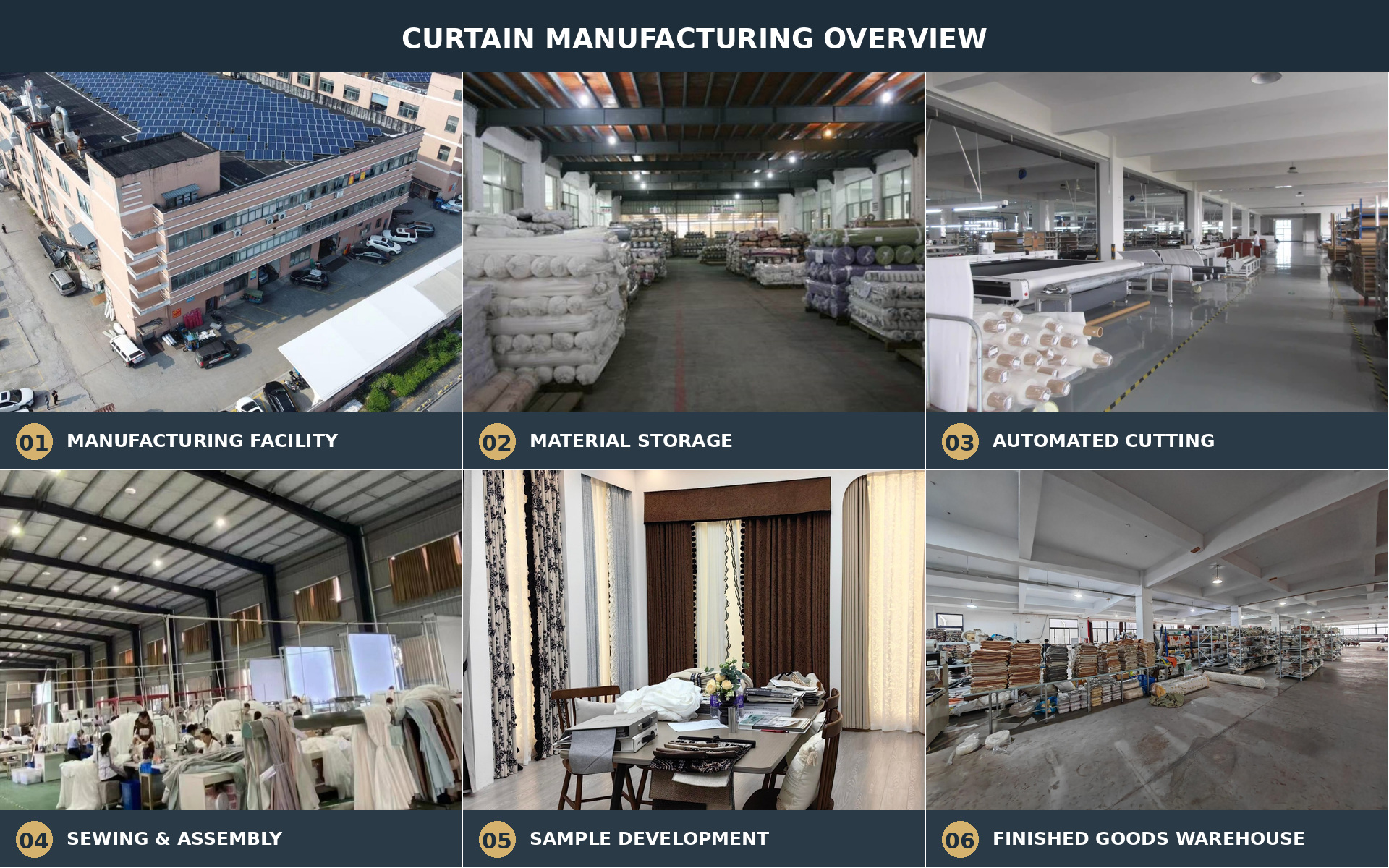
 Curtain Production Based in Keqiao, Shaoxing
Drapestra is a China-based curtain manufacturer supporting importers, wholesalers, private label brands, hospitality suppliers and commercial project buyers. Established in 2010, our manufacturing base is located in Keqiao District, Shaoxing, an established textile-production area.
The approximately 18,900 m² facility covers curtain production, sample development, inspection, packing, warehousing and shipment preparation. Six production lines support fabric preparation, cutting, sewing, finishing, quality inspection and export packing.
Typical monthly capacity is approximately 250,000–350,000 curtain panels. Actual output varies according to curtain style, fabric, dimensions, heading construction, customization and the combination of orders in production.
Manufacturing is organized around confirmed materials and specifications. Buyers should approve the product details and sample before customized bulk production begins.
Specification and Pre-Production Confirmation
Production planning starts with the curtain application, fabric, finished dimensions, heading style, accessories, quantity and packaging format. Logo, labels, barcodes, carton markings and functional requirements should also be included where applicable.
The production reference normally consists of:
- Approved fabric and color
- Finished width and drop length
- Heading, side-hem and bottom-hem construction
- Eyelets, hooks, tapes or other accessories
- Approved logo and label files
- Folding and individual packaging instructions
- Carton quantity and shipping marks
Material purchasing and production scheduling can be affected if these details change after approval. Customized samples generally require 7–15 working days, depending on the fabric and processing involved.
Fabric Preparation and Incoming Inspection
Before cutting, the fabric type, color and visible quality are checked against the approved specification. Fabric width, surface condition, pattern direction and color consistency are reviewed where relevant.
Different curtain materials require different handling. Sheer fabric must be controlled carefully during spreading and cutting, while velvet requires attention to pile direction. Printed and jacquard fabrics may need pattern-direction or repeat-position checks. Blackout materials must be handled in a way that protects their surface or backing.
More detailed material checks are explained on our Fabric Selection & Inspection page.
 Fabric Spreading and Cutting
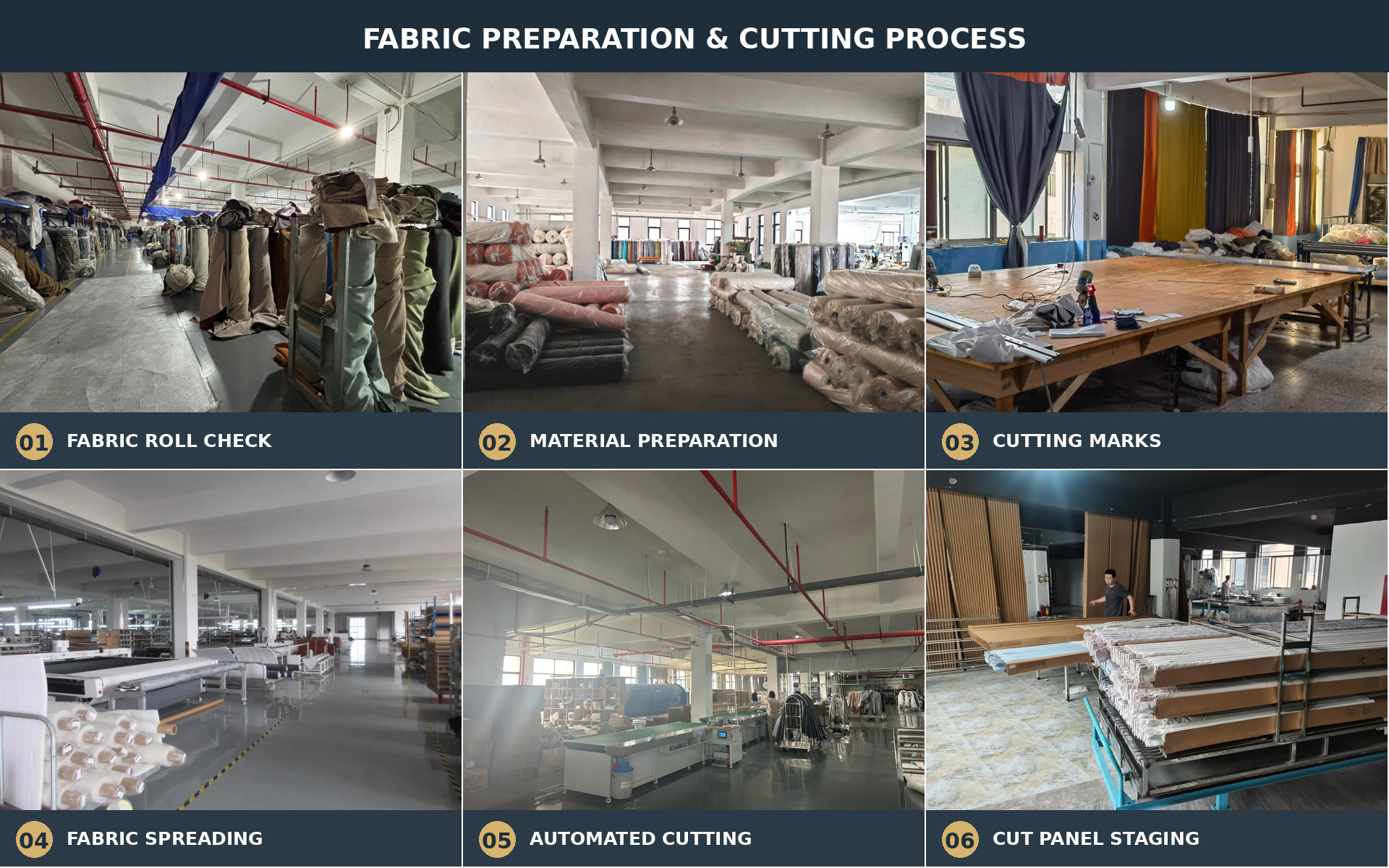
Fabric is spread and aligned according to the required panel dimensions, pattern direction and production quantity. Cutting specifications must account for heading construction, side hems, bottom hems and expected processing allowances.
Automatic or industrial cutting equipment may be used according to the material and order. Cut panels are grouped by style, color and size before moving to sewing. This helps reduce mixing between similar-looking variations in multi-size or multi-color orders.
Incorrect cutting can affect finished dimensions, paired-panel consistency and fabric usage across the complete production batch. The main control points are covered under the Fabric Cutting Process page.
Curtain Sewing and Construction
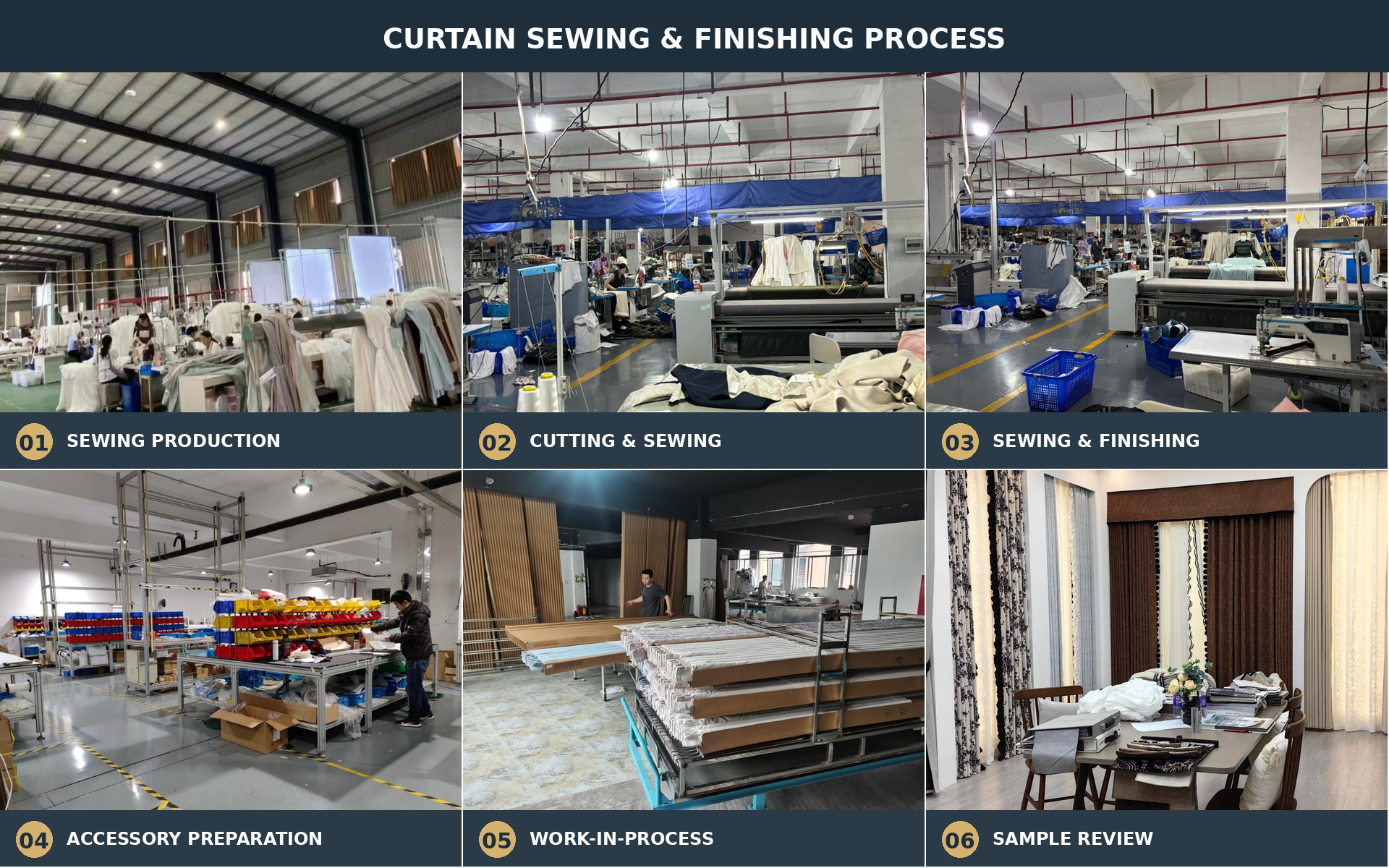
Cut panels move through side hemming, bottom hemming, heading preparation and assembly. Depending on the approved design, construction may include eyelets, hook tape, rod pockets, pinch pleats, lining, joining seams or additional accessories.
Industrial sewing equipment is selected according to the fabric and construction. Stitch type, seam allowance, thread color and tension should match the approved sample. Lightweight sheer fabric and thick blackout or velvet curtains cannot be sewn using exactly the same handling settings.
In-process checks focus on straight stitching, puckering, skipped stitches, seam strength, heading alignment and consistent workmanship across repeated panels.
 Heading, Accessories and Finishing
The heading controls how the curtain is installed and how it hangs. Eyelet spacing, hook positions, pleat intervals, heading height and tape alignment are checked against the confirmed dimensions.
Metal or plastic eyelets, hooks, curtain rings, tapes and other accessories must match the approved type, size and color. Poor spacing or inconsistent installation may cause uneven folds or problems during installation.
After sewing and accessory installation, curtains move through thread trimming, appearance review and finishing. Embroidery or printing is applied where specified and confirmed for the order.
More information about construction control is available on our Curtain Sewing & Stitching page.
In-Process and Finished Curtain Inspection
Quality control is carried out at multiple stages rather than only after production is complete. Inspection can include fabric appearance, color consistency, finished dimensions, stitching, hems, heading structure, accessories and paired-panel matching.
Logo position, label content and barcode information are checked against approved files. Functional or project-specific requirements are reviewed according to the confirmed order specification.
Final inspection identifies visible defects, workmanship problems and specification differences before the curtains enter packing. Third-party inspection or agreed testing can be arranged when required.
Folding, Packing and Shipment Preparation
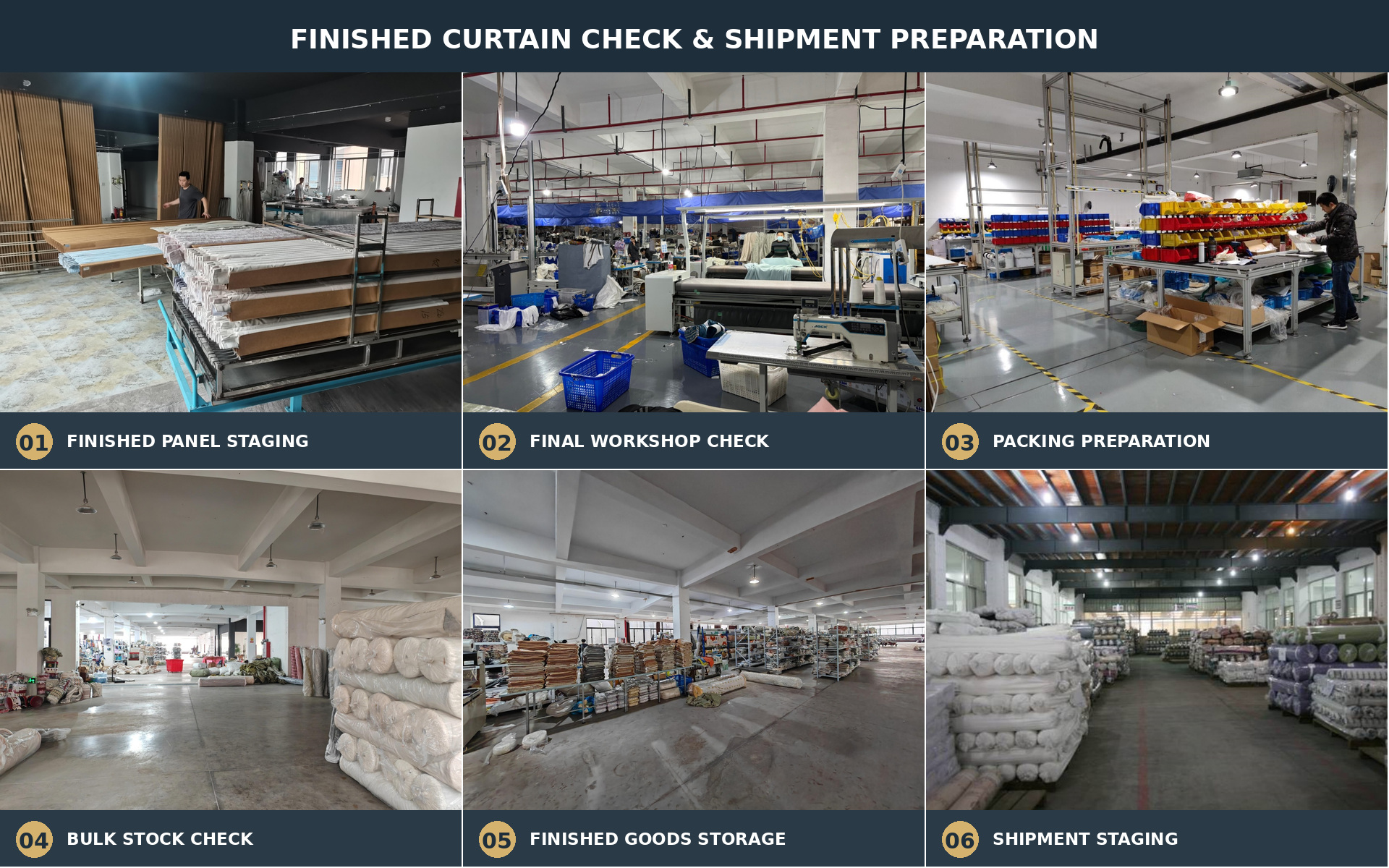
Finished curtains are folded according to the approved presentation and packed in individual poly bags or buyer-specified retail packaging. Inserts, hangtags, labels and barcodes are positioned according to the packing reference.
Packing checks cover:
- Correct product, size and color
- Panels or pieces per individual pack
- Label and barcode accuracy
- Folding and package appearance
- Packs per master carton
- Carton markings and carton numbers
Export cartons are prepared according to the product dimensions, packing quantity and shipment requirements. EXW, FOB, CIF and DDP shipment coordination is available according to the order and destination. Ningbo and Shanghai are the main nearby export ports.
 Production Lead Time and Capacity Planning
Typical bulk production takes approximately 25–35 working days after sample approval and order confirmation. Complex customized programs may require 35–45 working days.
Lead time depends on fabric availability, order quantity, colorways, dimensions, printing or embroidery, accessories, packaging and current production scheduling. Large project orders or programs with several specifications should be planned using a confirmed size and quantity breakdown.
The complete order sequence is explained on our Bulk Production Process page.
Information Needed for a Manufacturing Review
To evaluate production feasibility, please provide the curtain type, application, fabric or reference sample, dimensions, heading construction, colors, quantity per variation, branding, packaging, destination and requested delivery schedule.
Clear specifications allow us to assess material availability, sampling requirements, MOQ, production time, quality-control points and packing needs before preparing the quotation.