


Cutting Converts Specifications into Production Panels
Fabric cutting determines the dimensions, alignment and material usage of a curtain order. Drapestra prepares and cuts curtain fabrics according to the approved sample, finished measurements, heading construction and production quantity.
The process applies to window curtains, blackout curtains, sheer curtains, hotel curtain programs and other suitable fabric curtain categories. Each material requires different handling based on its width, structure, surface, pattern and dimensional behavior.
Cutting does not begin until the fabric, color and main specifications have been confirmed. Incoming material checks are explained on our Fabric Selection & Inspection page.
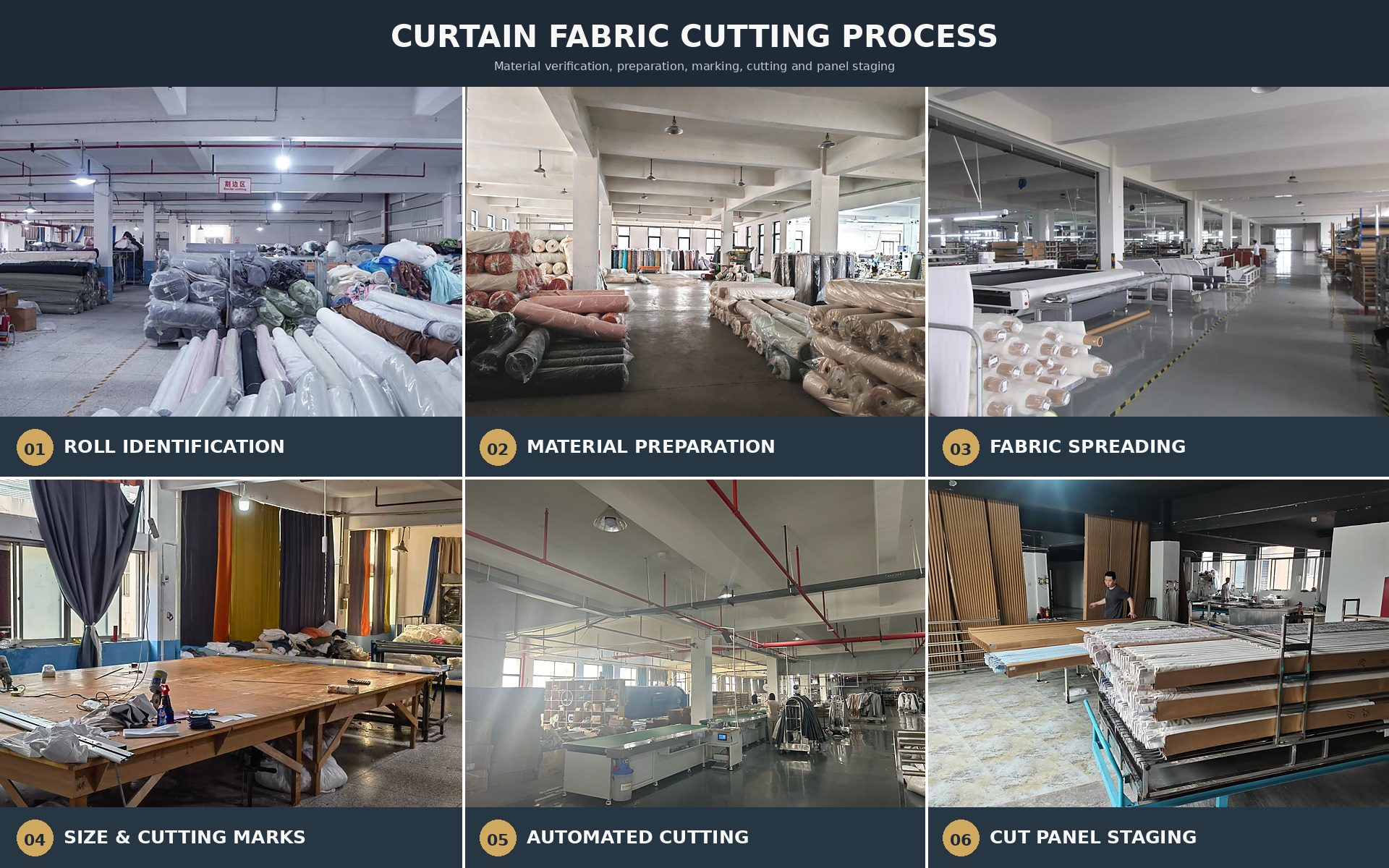 Cutting Information Confirmed Before Production
A cutting specification must translate the required finished curtain size into the correct fabric dimensions. It should account for all material used in the heading, side hems, bottom hem, seams and other construction details.
The cutting team requires:
- Finished curtain width and drop length
- Single-panel or paired-panel configuration
- Heading type and finished heading height
- Side-hem and bottom-hem construction
- Lining or multi-layer construction
- Pattern direction and repeat requirements
- Quantity per size, style and color
- Approved tolerance requirements
Finished curtain measurements should not be treated as raw cutting dimensions. Additional fabric is required for folding, sewing, hems, pleats and heading construction. Detailed size planning is covered under Custom Sizes & Dimensions.
Fabric Spreading and Alignment
Before cutting, the fabric is spread on the cutting table and aligned to reduce distortion. Fabric tension should remain controlled because stretching during spreading may cause dimensional differences after the panel is released.
Sheer fabrics require careful handling to avoid shifting and uneven edges. Velvet must be arranged with a consistent pile direction. Printed, jacquard and embroidered materials may require alignment according to the motif, repeat or visual direction.
For paired curtains, the material arrangement must consider whether the two panels require matching patterns or symmetrical presentation.
Cutting Marks and Allowances
Cutting lines are prepared according to the approved dimensions and construction requirements. Marks may identify finished size references, hem allowances, heading depth, joining positions or accessory locations.
Measurement errors at this stage can affect curtain length, paired-panel consistency, heading position and overall installation. Marking must therefore remain clear and associated with the correct order, color and size.
If the order contains several similar dimensions, cut components should be identified carefully to prevent mixing between production batches.
Industrial and Automatic Cutting
Automatic or industrial cutting equipment may be used depending on the fabric, order quantity and cutting arrangement. Equipment selection is based on material behavior and production needs rather than applying one method to every curtain.
Bulk orders may involve several layers or repeated panels. The layers must remain aligned so upper and lower pieces do not develop different dimensions. Thick, slippery or delicate materials may require adjusted layer quantities and handling methods.
The goal is consistent cutting without damaging the fabric surface, backing or patterned areas.
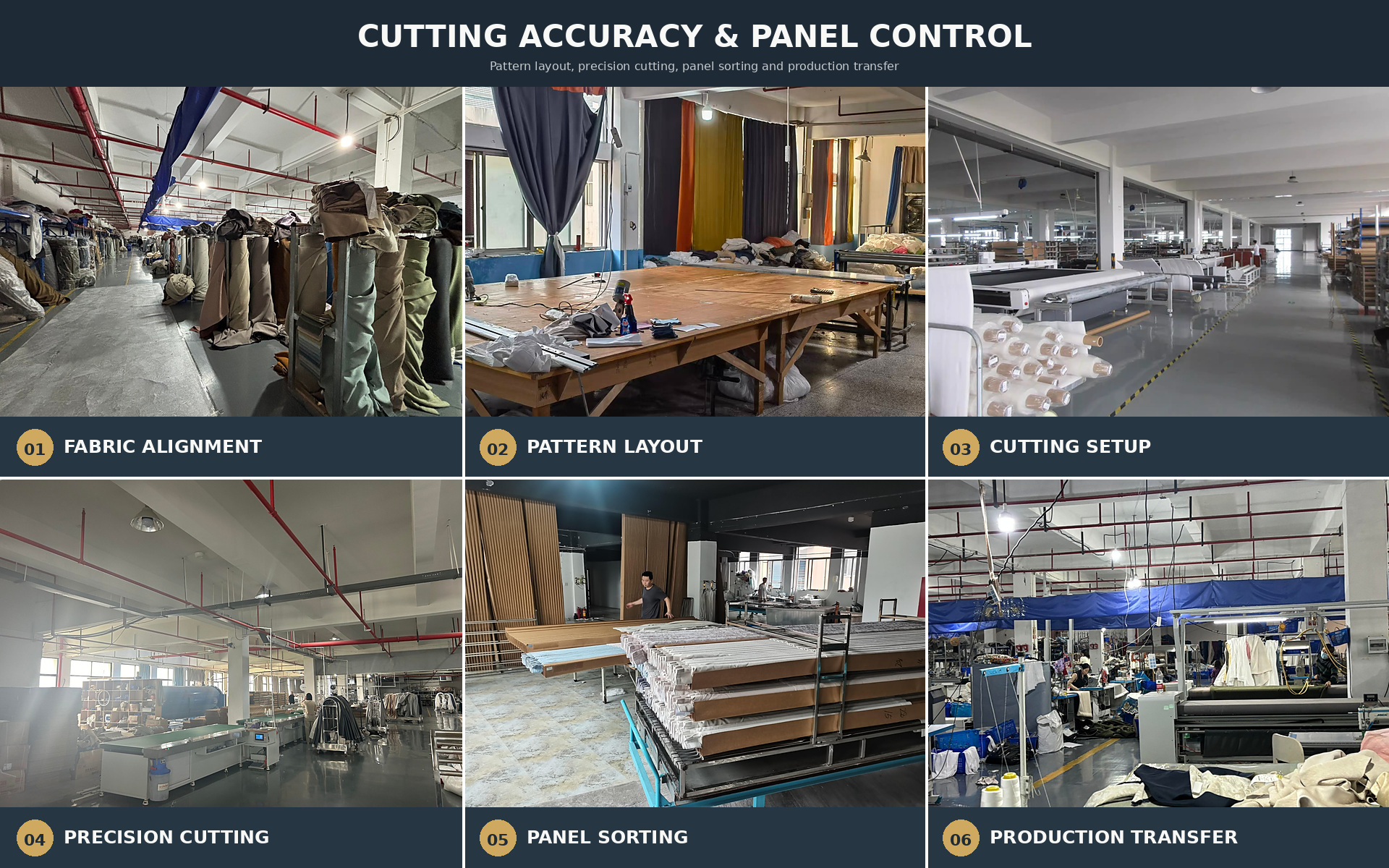 Cut Panel Identification and Inspection
After cutting, panels are grouped by order, style, color and size. Batch identification supports traceability through sewing, finishing and inspection.
Cut panels may be checked for dimensions, edge condition, pattern direction and visible fabric issues before being released to sewing. Incorrect or damaged pieces should be separated rather than mixed with approved components.
For paired products, both panels should come from compatible fabric batches where color or pattern matching is required.
Effect on Cost, MOQ and Lead Time
Fabric width, curtain dimensions, pattern repeat and cutting efficiency affect material consumption and quotation. Large pattern repeats or matched pairs can increase fabric usage. Multiple sizes and colorways can also require separate cutting plans and batch identification.
Customized OEM curtain programs commonly start from 500–1,000 pieces per style or color. Typical bulk production requires approximately 25–35 working days after approval, while complex programs may require 35–45 working days.
Release to Sewing Production
Approved cut panels move to sewing with the applicable construction instructions and batch identification. Side hems, bottom hems, headings, linings and accessories are completed according to the approved sample.
The next production stage is detailed on our Curtain Sewing & Stitching page.
For a cutting and production review, provide the fabric specification, finished dimensions, heading construction, pattern requirements, quantity breakdown and approved tolerance.