


Edge finishing and hemming affect a curtain’s final dimensions, hanging balance and overall appearance. Uneven side hems, twisted edges or inconsistent bottom hems can remain visible after installation, particularly on sheer curtains, plain fabrics and paired panels.
For OEM, wholesale and project orders, Drapestra confirms the required hem construction during sample development. Fabric type, finished size, curtain weight, heading structure and intended hanging effect are considered before the details are transferred to bulk production.
Hem Construction Based on Curtain Fabric
Different fabrics require different handling during folding and sewing. Lightweight sheers can shift, stretch or pucker, while velvet, blackout and multilayer fabrics need sufficient control to maintain an even edge without excessive bulk.
Common production details include:
- Single-fold or double-fold side hems
- Bottom hems with an agreed finished depth
- Narrow hems for lightweight sheer curtains
- Joined edges for lined or multilayer constructions
- Reinforcement where accessories create additional load
- Weighted or specialized bottom finishes when specified
The appropriate construction is confirmed according to the product rather than applied as one standard method across every curtain type.
Our curtain sewing and stitching page explains how the approved seam and heading specifications are managed during production.
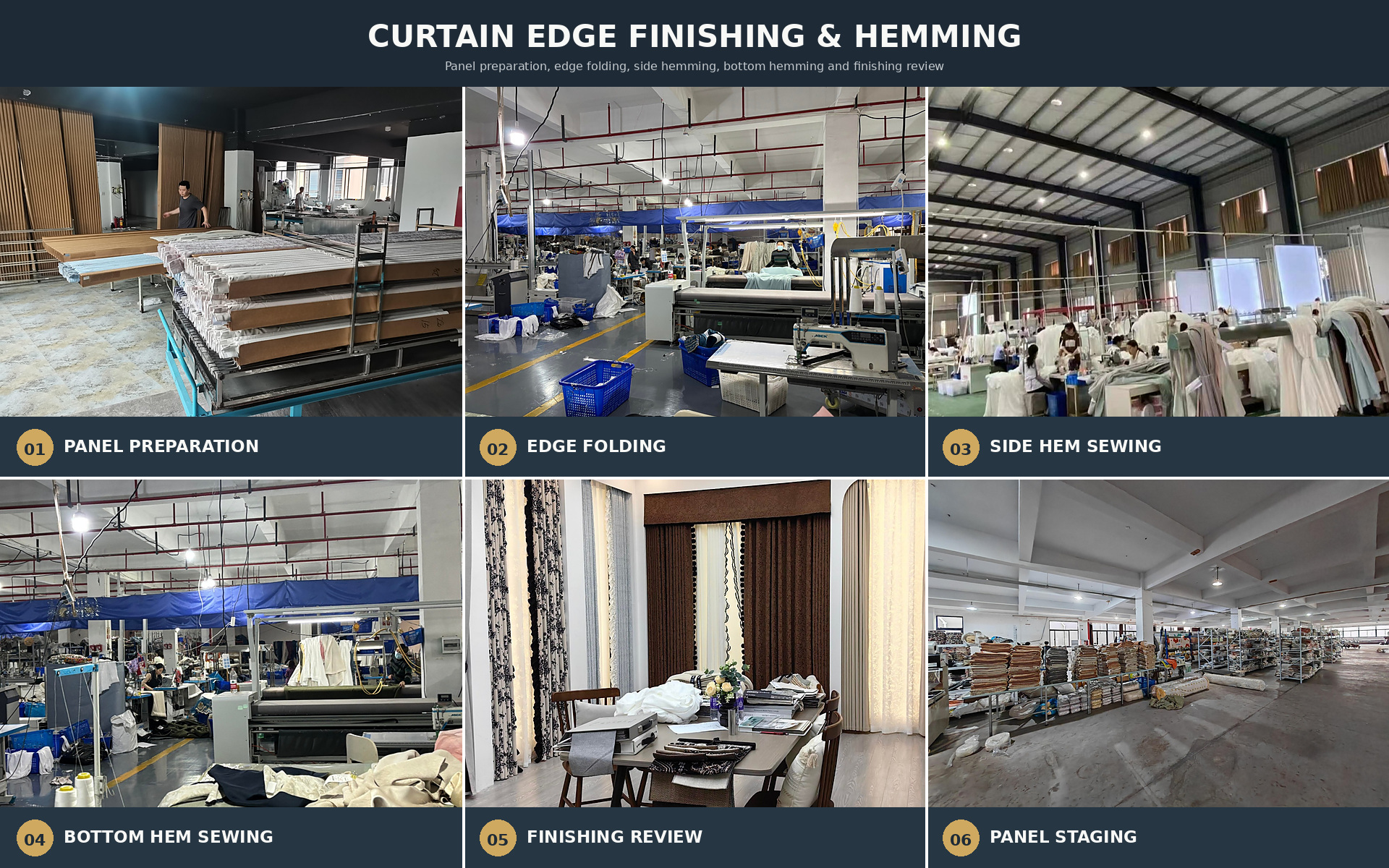 Side Edge Alignment and Appearance
Side hems should remain straight from the heading to the bottom of the panel. The fabric is aligned before folding so the finished edge does not twist or pull the curtain out of shape.
Operators check fold width, seam position and fabric tension during sewing. On sheer or lightly colored curtains, thread selection and stitch appearance require additional attention because the seam is more visible. For patterned fabrics, the edge treatment must also preserve the intended pattern position and panel balance.
If two panels are supplied as a pair, both should follow the same approved hem construction and measurement method.
Bottom Hem Depth and Finished Length
The bottom hem influences the curtain’s finished drop and hanging weight. Its depth must therefore be included when calculating the cutting allowance and final dimensions.
Before bulk production, the specification should identify whether the required length is measured from the top edge, eyelet, hook position or another agreed reference point. This avoids differences between the buyer’s stated size and the factory’s production measurement.
Finished width and drop are checked through the size measurement inspection process after sewing and fabric relaxation.
In-Process Checks During Hemming
Hemming inspection is carried out while production is running. This allows repeated workmanship problems to be corrected before they affect a larger quantity.
The main inspection points include:
- Consistent side and bottom hem depth
- Straight seams and controlled fabric tension
- No skipped stitches, loose threads or open seams
- No visible puckering, twisting or edge distortion
- Correct finished dimensions after hemming
- Consistency between matching or paired panels
Inspection tolerances should be agreed according to the curtain size, fabric behavior and project requirements. A lightweight sheer panel and a heavy blackout curtain may require different practical control points.
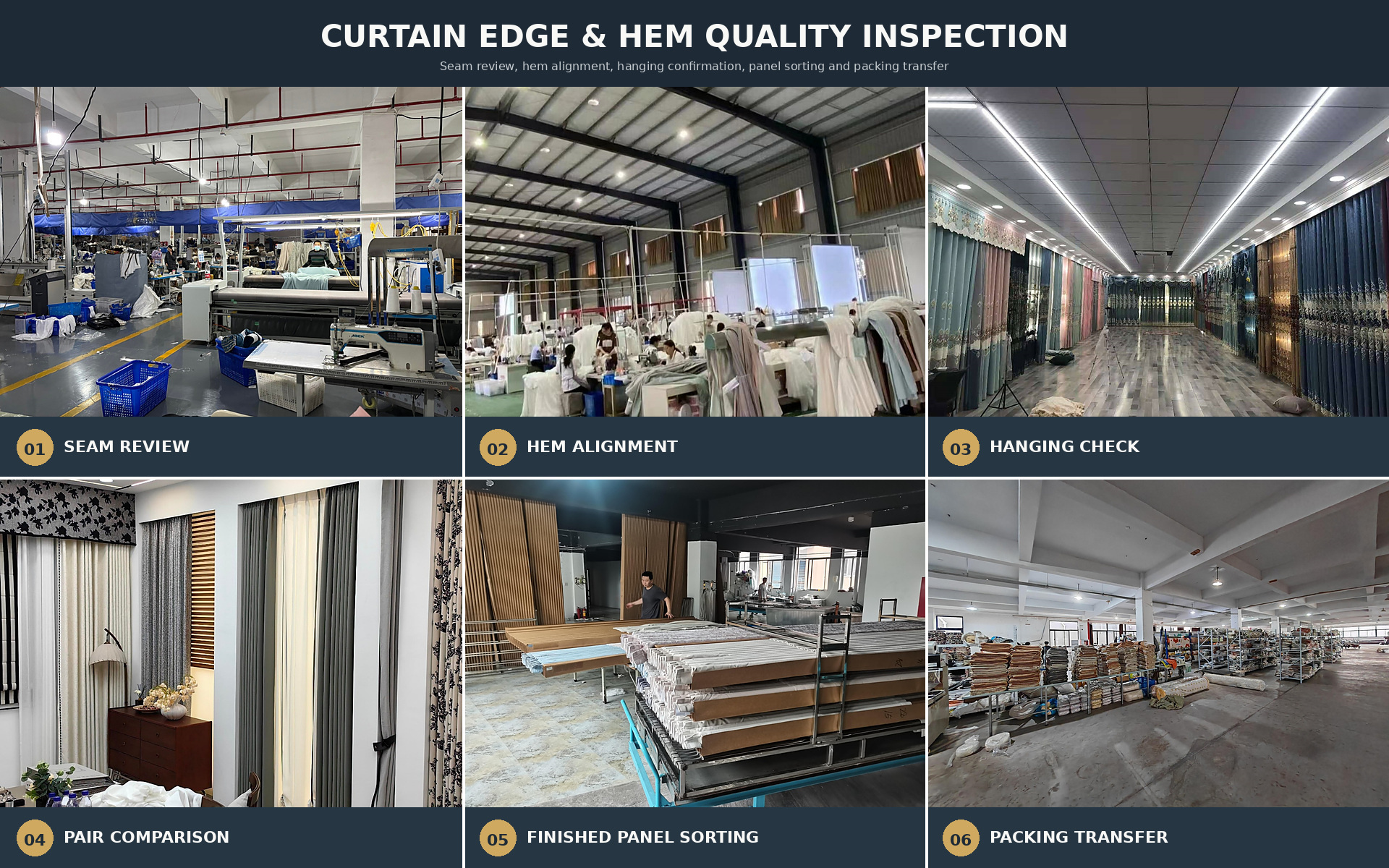 Sample Approval Before Bulk Production
For a customized curtain, the sample should confirm the side hem, bottom hem, thread color, finished dimensions and hanging appearance. Any required adjustment is recorded before bulk production begins.
Fabric changes made after approval may require the hem construction to be reviewed again. A heavier fabric, additional lining or different finished length can influence sewing difficulty, material consumption, sample time and production lead time.
After edge finishing, completed panels proceed to finished curtain inspection for workmanship, dimensions, accessories and appearance checks before the folding and packing process.
Information Needed for a Hemming Quotation
Please provide the curtain type, fabric, finished width and length, heading style, side and bottom hem requirements, lining details, quantity per size and color, and any reference sample or technical drawing.
These details allow us to evaluate material allowance, sewing complexity, sample requirements and the quality-control points needed for your OEM or bulk curtain order.